Hamlet Study Guide
Please see the main page for the complete play with explanatory notes for each scene.
 Introduction to Hamlet Introduction to Hamlet
Hamlet: Problem Play and Revenge Tragedy
The Hamlet and Ophelia Subplot
The Norway Subplot in Hamlet
Introduction to the Characters in Hamlet
Hamlet Plot Summary
The Purpose of The Murder of Gonzago
The Dumb-Show: Why Hamlet Reveals his Knowledge to Claudius
The Elder Hamlet: The Kingship of Hamlet's Father
Hamlet's Relationship with the Ghost
Philological Examination Questions on Hamlet
Quotations from Hamlet (with commentary)
Hamlet Study Quiz (with detailed answers)
Analysis of I am sick at heart (1.1)
Hamlet: Q & A
Soliloquy Analysis: O this too too... (1.2)
Soliloquy Analysis: O, what a rogue and peasant slave am I!... (2.2)
Soliloquy
Analysis: To be, or not to be... (3.1)
Soliloquy Analysis: Tis now the very witching time of night... (3.2)
Soliloquy Analysis: Now might I do it pat... (3.3)
Soliloquy Analysis: How all occasions do inform against me... (4.4)
Ophelia's Burial and Christian Rituals
The Baker's Daughter: Ophelia's Nursery Rhymes
Hamlet as National Hero
Claudius and the Condition of Denmark
In Secret Conference: The Meeting Between Claudius and Laertes
O Jephthah - Toying with Polonius
The Death of Polonius and its Impact on Hamlet's Character
Blank Verse and Diction in Shakespeare's Hamlet
Hamlet's Silence
An Excuse for Doing Nothing: Hamlet's Delay
Foul Deeds Will Rise: Hamlet and Divine Justice
Defending Claudius - The Charges Against the King
Shakespeare's Fools: The Grave-Diggers in Hamlet
Hamlet's Humor: The Wit of Shakespeare's Prince of Denmark
All About Yorick
Hamlet's Melancholy: The Transformation of the Prince
Hamlet's Antic Disposition: Is Hamlet's Madness Real?
The Significance of the Ghost in Armor
The Significance of Ophelia's Flowers
Ophelia and Laertes
Mistrusted Love: Ophelia and Polonius
Divine Providence in Hamlet
What is Tragic Irony?
Seneca's Tragedies and the Elizabethan Drama
Shakespeare's Sources for Hamlet
Characteristics of Elizabethan Tragedy
Why Shakespeare is so Important
Shakespeare's Language
Shakespeare's Influence on Other Writers
|
In the Spotlight
Quote in Context
 O, what a rogue and peasant slave am I! O, what a rogue and peasant slave am I!
Is it not monstrous that this player here,
But in a fiction, in a dream of passion,
Could force his soul so to his own conceit
That from her working all his visage wann'd,
Tears in his eyes, distraction in's aspect,
A broken voice, and his whole function suiting
With forms to his conceit? and all for nothing!
For Hecuba!
Hamlet (2.2), Hamlet
In addition to revealing Hamlet's plot to catch the king in his guilt, Hamlet's second soliloquy uncovers the very essence of Hamlet's true conflict. For he is undeniably committed to seeking revenge for his father, yet he cannot act on behalf of his father due to his revulsion toward extracting that cold and calculating revenge. Read on...
_______
|
Hamlet History
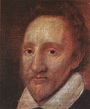 King Claudius. Our son shall win. King Claudius. Our son shall win.
Queen Gertrude. He's fat, and scant of breath.
Hamlet (5.2)
Gertrude's startling description of her son is not quite what we modern readers have in mind when envisioning the brooding young Prince Hamlet. But how can we explain the Queen's frank words? There is evidence to believe that Shakespeare had to work around the rotund stature of his good friend Richard Burbage, the first actor to play Hamlet. "As he was a portly man of large physique, it was natural that the strenuous exertion bring out the fact that he was fat or out of training, as well as scant of breath....He was the first and the last fat Hamlet" (Blackmore, Riddles of Hamlet). An elegy written upon Burbage's death in 1619 convincingly ties "King Dick", as he was affectionately called by his fellow actors, to the line in question:
No more young Hamlet, though but scant of breath,
Shall cry Revenge! for his dear father's death.
(A Funeral Elegy)
It is natural to wonder why the death of Burbage was a national tragedy, while the passing of Shakespeare himself just three years earlier received such little attention. There seems, however, to be a simple answer. Read on...
_______
|
|