| | Enter QUEEN ELIZABETH, RIVERS, and GREY. | |
| RIVERS | Have patience, madam: there's no doubt his majesty | |
| | Will soon recover his accustom'd health. | |
| GREY | In that you brook it ill, it makes him worse: | |
| | Therefore, for God's sake, entertain good comfort, |
| | And cheer his grace with quick and merry words. |
| QUEEN ELIZABETH | If he were dead, what would betide of me? | |
| RIVERS | No other harm but loss of such a lord. | |
| QUEEN ELIZABETH | The loss of such a lord includes all harm. | |
| GREY | The heavens have bless'd you with a goodly son, |
| | To be your comforter when he is gone. | | 10 |
| QUEEN ELIZABETH | Oh, he is young and his minority | |
| | Is put unto the trust of Richard Gloucester, | |
| | A man that loves not me, nor none of you. | |
| RIVERS | Is it concluded that he shall be protector? |
| QUEEN ELIZABETH | It is determined, not concluded yet: |
| | But so it must be, if the king miscarry.
| |
| | Enter BUCKINGHAM and STANLEY. | |
| GREY | Here come the lords of Buckingham and Stanley. | |
| BUCKINGHAM | Good time of day unto your royal grace! | |
| STANLEY | God make your majesty joyful as you have been! |
| QUEEN ELIZABETH | The Countess Richmond, good my Lord of Stanley. | | 20 |
| | To your good prayers will scarcely say amen. | |
| | Yet, Stanley, notwithstanding she's your wife, | |
| | And loves not me, be you, good lord, assured | |
| | I hate not you for her proud arrogance. |
| STANLEY | I do beseech you, either not believe | |
| | The envious slanders of her false accusers; | |
| | Or, if she be accused in true report, | |
| | Bear with her weakness, which, I think proceeds | |
| | From wayward sickness, and no grounded malice. |
| RIVERS | Saw you the king to-day, my Lord of Stanley? | | 30 |
| STANLEY | But now the Duke of Buckingham and I |
| | Are come from visiting his majesty. | |
| QUEEN ELIZABETH | What likelihood of his amendment, lords? | |
| BUCKINGHAM | Madam, good hope; his grace speaks cheerfully. |
| QUEEN ELIZABETH | God grant him health! Did you confer with him? | |
| BUCKINGHAM | Madam, we did: he desires to make atonement | |
| | Betwixt the Duke of Gloucester and your brothers, | |
| | And betwixt them and my lord chamberlain; | |
| | And sent to warn them to his royal presence. |
| QUEEN ELIZABETH | Would all were well! but that will never be | | 40 |
| | I fear our happiness is at the highest. | |
| | Enter GLOUCESTER, HASTINGS, and DORSET. | |
| GLOUCESTER | They do me wrong, and I will not endure it: | |
| | Who are they that complain unto the king, | |
| | That I, forsooth, am stern, and love them not? |
| | By holy Paul, they love his grace but lightly | |
| | That fill his ears with such dissentious rumours. |
| | Because I cannot flatter and speak fair, | |
| | Smile in men's faces, smooth, deceive and cog, | |
| | Duck with French nods and apish courtesy, |
| | I must be held a rancorous enemy. | | 50 |
| | Cannot a plain man live and think no harm, | |
| | But thus his simple truth must be abused | |
| | By silken, sly, insinuating Jacks? | |
| RIVERS | To whom in all this presence speaks your grace? |
| GLOUCESTER | To thee, that hast nor honesty nor grace. | |
| | When have I injured thee? when done thee wrong? | |
| | Or thee? or thee? or any of your faction? | |
| | A plague upon you all! His royal person,-- | |
| | Whom God preserve better than you would wish!-- |
| | Cannot be quiet scarce a breathing-while, | | 60 |
| | But you must trouble him with lewd complaints. | |
| QUEEN ELIZABETH | Brother of Gloucester, you mistake the matter. | |
| | The king, of his own royal disposition, | |
| | And not provoked by any suitor else; | |
| | Aiming, belike, at your interior hatred, | |
| | Which in your outward actions shows itself | |
| | Against my kindred, brothers, and myself, | |
| | Makes him to send; that thereby he may gather | |
| | The ground of your ill-will, and so remove it. |
| GLOUCESTER | I cannot tell: the world is grown so bad, | |
| | That wrens make prey where eagles dare not perch: | |
| | Since every Jack became a gentleman | |
| | There's many a gentle person made a Jack. | |
| QUEEN ELIZABETH | Come, come, we know your meaning, brother |
| | Gloucester; | | 75 |
| | You envy my advancement and my friends': | |
| | God grant we never may have need of you! | |
| GLOUCESTER | Meantime, God grants that we have need of you: | |
| | Your brother is imprison'd by your means, |
| | Myself disgraced, and the nobility | |
| | Held in contempt; whilst many fair promotions | | 80 |
| | Are daily given to ennoble those | |
| | That scarce, some two days since, were worth a noble. | |
| QUEEN ELIZABETH | By Him that raised me to this careful height |
| | From that contented hap which I enjoy'd, | |
| | I never did incense his majesty | |
| | Against the Duke of Clarence, but have been | |
| | An earnest advocate to plead for him. | |
| | My lord, you do me shameful injury, |
| | Falsely to draw me in these vile suspects. | |
| GLOUCESTER | You may deny that you were not the cause | | 90 |
| | Of my Lord Hastings' late imprisonment. | |
| RIVERS | She may, my lord, for-- | |
| GLOUCESTER | She may, Lord Rivers! why, who knows not so? |
| | She may do more, sir, than denying that: | |
| | She may help you to many fair preferments, | |
| | And then deny her aiding hand therein, | |
| | And lay those honours on your high deserts. | |
| | What may she not? She may, yea, marry, may she-- |
| RIVERS | What, marry, may she? | |
| GLOUCESTER | What, marry, may she! marry with a king, | | 100 |
| | A bachelor, a handsome stripling too: | |
| | I wis your grandam had a worser match. |
| QUEEN ELIZABETH | My Lord of Gloucester, I have too long borne |
| | Your blunt upbraidings and your bitter scoffs: | |
| | By heaven, I will acquaint his majesty | |
| | With those gross taunts I often have endured. | |
| | I had rather be a country servant-maid | |
| | Than a great queen, with this condition, |
| | To be thus taunted, scorn'd, and baited at: | |
| | Enter QUEEN MARGARET, behind. | |
| | Small joy have I in being England's queen. | |
| QUEEN MARGARET | And lessen'd be that small, God, I beseech thee! | |
| | Thy honour, state and seat is due to me. | |
| GLOUCESTER | What! threat you me with telling of the king? |
| | Tell him, and spare not: look, what I have said | |
| | I will avouch in presence of the king: | |
| | I dare adventure to be sent to the Tower. | |
| | 'Tis time to speak; my pains are quite forgot. |
| QUEEN MARGARET | Out, devil! I remember them too well: |
| | Thou kill'dst my husband Henry in the Tower, | |
| | And Edward, my poor son, at Tewksbury. | | 120 |
| GLOUCESTER | Ere you were queen, yea, or your husband king, | |
| | I was a pack-horse in his great affairs; | |
| | A weeder-out of his proud adversaries, |
| | A liberal rewarder of his friends: | |
| | To royalize his blood I spilt mine own. | |
| QUEEN MARGARET | Yea, and much better blood than his or thine. | |
| GLOUCESTER | In all which time you and your husband Grey | |
| | Were factious for the house of Lancaster; |
| | And, Rivers, so were you. Was not your husband | |
| | In Margaret's battle at Saint Albans slain? | | 130 |
| | Let me put in your minds, if you forget, | |
| | What you have been ere now, and what you are; | |
| | Withal, what I have been, and what I am. |
| QUEEN MARGARET | A murderous villain, and so still thou art. | |
| GLOUCESTER | Poor Clarence did forsake his father, Warwick; | |
| | Yea, and forswore himself,--which Jesu pardon!-- | |
| QUEEN MARGARET | Which God revenge! | |
| GLOUCESTER | To fight on Edward's party for the crown; |
| | And for his meed, poor lord, he is mew'd up. | |
| | I would to God my heart were flint, like Edward's; | | 140 |
| | Or Edward's soft and pitiful, like mine | |
| | I am too childish-foolish for this world. |
| QUEEN MARGARET | Hie thee to hell for shame, and leave the world, |
| | Thou cacodemon! there thy kingdom is. | |
| RIVERS | My Lord of Gloucester, in those busy days | |
| | Which here you urge to prove us enemies, | |
| | We follow'd then our lord, our lawful king: | |
| | So should we you, if you should be our king. |
| GLOUCESTER | If I should be! I had rather be a pedlar: | |
| | Far be it from my heart, the thought of it! | | 150 |
| QUEEN ELIZABETH | As little joy, my lord, as you suppose | |
| | You should enjoy, were you this country's king, | |
| | As little joy may you suppose in me. |
| | That I enjoy, being the queen thereof. | |
| QUEEN MARGARET | A little joy enjoys the queen thereof; |
| | For I am she, and altogether joyless. | |
| | I can no longer hold me patient. | |
| | [ Advancing. | |
| | Hear me, you wrangling pirates, that fall out |
| | In sharing that which you have pill'd from me! | |
| | Which of you trembles not that looks on me? | | 160 |
| | If not, that, I being queen, you bow like subjects, | |
| | Yet that, by you depos'd, you quake like rebels? | |
| | O gentle villain, do not turn away! |
| GLOUCESTER | Foul, wrinkled witch, what mak'st thou in my sight? | |
| QUEEN MARGARET | But repetition of what thou hast marr'd; | |
| | That will I make before I let thee go. | |
| GLOUCESTER | Wert thou not banished on pain of death? | |
| QUEEN MARGARET | I was; but I do find more pain in banishment |
| | Than death can yield me here by my abode. | |
| | A husband and a son thou ow'st to me; | | 170 |
| | And thou a kingdom; all of you allegiance: | |
| | The sorrow that I have, by right is yours, | |
| | And all the pleasures you usurp are mine. |
| GLOUCESTER | The curse my noble father laid on thee, | |
| | When thou didst crown his warlike brows with paper | |
| | And with thy scorns drew'st rivers from his eyes, | |
| | And then, to dry them, gavest the duke a clout | |
| | Steep'd in the faultless blood of pretty Rutland-- |
| | His curses, then from bitterness of soul | |
| | Denounced against thee, are all fall'n upon thee; | |
| | And God, not we, hath plagued thy bloody deed. | |
| QUEEN ELIZABETH | So just is God, to right the innocent. | |
| HASTINGS | O, 'twas the foulest deed to slay that babe, |
| | And the most merciless that e'er was heard of! | |
| RIVERS | Tyrants themselves wept when it was reported. | |
| DORSET | No man but prophesied revenge for it. | |
| BUCKINGHAM | Northumberland, then present, wept to see it. | |
| QUEEN MARGARET | What! were you snarling all before I came, |
| | Ready to catch each other by the throat, | |
| | And turn you all your hatred now on me? | | 190 |
| | Did York's dread curse prevail so much with heaven? | |
| | That Henry's death, my lovely Edward's death, | |
| | Their kingdom's loss, my woful banishment, |
| | Could all but answer for that peevish brat? |
| | Can curses pierce the clouds and enter heaven? | |
| | Why, then, give way, dull clouds, to my quick curses! | |
| | If not by war, by surfeit die your king, | |
| | As ours by murder, to make him a king! |
| | Edward thy son, which now is Prince of Wales, | |
| | For Edward my son, which was Prince of Wales, | | 200 |
| | Die in his youth by like untimely violence! | |
| | Thyself a queen, for me that was a queen, | |
| | Outlive thy glory, like my wretched self! |
| | Long mayst thou live to wail thy children's loss; | |
| | And see another, as I see thee now, | |
| | Deck'd in thy rights, as thou art stall'd in mine! | |
| | Long die thy happy days before thy death; | |
| | And, after many lengthen'd hours of grief, |
| | Die neither mother, wife, nor England's queen! | |
| | Rivers and Dorset, you were standers by, | | 210 |
| | And so wast thou, Lord Hastings, when my son | |
| | Was stabb'd with bloody daggers: God, I pray him, | |
| | That none of you may live your natural age, |
| | But by some unlook'd accident cut off! | |
| GLOUCESTER | Have done thy charm, thou hateful wither'd hag! | |
| QUEEN MARGARET | And leave out thee? stay, dog, for thou shalt hear me. | |
| | If heaven have any grievous plague in store | |
| | Exceeding those that I can wish upon thee, |
| | O, let them keep it till thy sins be ripe, | |
| | And then hurl down their indignation | | 220 |
| | On thee, the troubler of the poor world's peace! | |
| | The worm of conscience still begnaw thy soul! | |
| | Thy friends suspect for traitors while thou livest, |
| | And take deep traitors for thy dearest friends! | |
| | No sleep close up that deadly eye of thine, | |
| | Unless it be whilst some tormenting dream | |
| | Affrights thee with a hell of ugly devils! | |
| | Thou elvish-mark'd, abortive, rooting hog! |
| | Thou that wast seal'd in thy nativity | |
| | The slave of nature and the son of hell! | | 230 |
| | Thou slander of thy mother's heavy womb! | |
| | Thou loathed issue of thy father's loins! | |
| | Thou rag of honour! thou detested-- |
| GLOUCESTER | Margaret. | |
| QUEEN MARGARET | Richard! | |
| GLOUCESTER | Ha! | |
| QUEEN MARGARET | I call thee not. | |
| GLOUCESTER | I cry thee mercy then, for I had thought |
| | That thou hadst call'd me all these bitter names. | |
| QUEEN MARGARET | Why, so I did; but look'd for no reply. | |
| | O, let me make the period to my curse! | |
| GLOUCESTER | 'Tis done by me, and ends in 'Margaret.' | |
| QUEEN ELIZABETH | Thus have you breathed your curse against yourself. |
| QUEEN MARGARET | Poor painted queen, vain flourish of my fortune! | |
| | Why strew'st thou sugar on that bottled spider, | | 240 |
| | Whose deadly web ensnareth thee about? | |
| | Fool, fool! thou whet'st a knife to kill thyself. | |
| | The time will come when thou shalt wish for me |
| | To help thee curse that poisonous bunchback'd toad. | |
| HASTINGS | False-boding woman, end thy frantic curse, | |
| | Lest to thy harm thou move our patience. | |
| QUEEN MARGARET | Foul shame upon you! you have all mov'd mine. | |
| RIVERS | Were you well served, you would be taught your duty. |
| QUEEN MARGARET | To serve me well, you all should do me duty, | |
| | Teach me to be your queen, and you my subjects: | | 250 |
| | O, serve me well, and teach yourselves that duty! | |
| DORSET | Dispute not with her; she is lunatic. | |
| QUEEN MARGARET | Peace, master marquess, you are malapert: |
| | Your fire-new stamp of honour is scarce current. |
| | O, that your young nobility could judge | |
| | What 'twere to lose it, and be miserable! | |
| | They that stand high have many blasts to shake them; | |
| | And if they fall, they dash themselves to pieces. |
| GLOUCESTER | Good counsel, marry: learn it, learn it, marquess. | |
| DORSET | It toucheth you, my lord, as much as me. | | 260 |
| GLOUCESTER | Yea, and much more: but I was born so high, | |
| | Our aery buildeth in the cedar's top, | |
| | And dallies with the wind and scorns the sun. |
| QUEEN MARGARET | And turns the sun to shade; alas! alas! | |
| | Witness my son, now in the shade of death, |
| | Whose bright out-shining beams thy cloudy wrath | |
| | Hath in eternal darkness folded up. | |
| | Your aery buildeth in our aery's nest. |
| | O God, that seest it, do not suffer it! | |
| | As it was won with blood, lost be it so! | | 270 |
| BUCKINGHAM | Have done! for shame, if not for charity. | |
| QUEEN MARGARET | Urge neither charity nor shame to me: | |
| | Uncharitably with me have you dealt, |
| | And shamefully by you my hopes are butcher'd. | |
| | My charity is outrage, life my shame | |
| | And in that shame still live my sorrow's rage. | |
| BUCKINGHAM | Have done, have done. | |
| QUEEN MARGARET | O princely Buckingham I'll kiss thy hand, |
| | In sign of league and amity with thee: | |
| | Now fair befal thee and thy noble house! | | 280 |
| | Thy garments are not spotted with our blood, | |
| | Nor thou within the compass of my curse. | |
| BUCKINGHAM | Nor no one here; for curses never pass |
| | The lips of those that breathe them in the air. | |
| QUEEN MARGARET | I'll not believe but they ascend the sky, | |
| | And there awake God's gentle-sleeping peace. | |
| | O Buckingham, take heed of yonder dog! | |
| | Look, when he fawns, he bites; and when he bites, |
| | His venom tooth will rankle to the death: | |
| | Have not to do with him, beware of him; | | 290 |
| | Sin, death, and hell have set their marks on him, | |
| | And all their ministers attend on him. | |
| GLOUCESTER | What doth she say, my Lord of Buckingham? |
| BUCKINGHAM | Nothing that I respect, my gracious lord. | |
| QUEEN MARGARET | What, dost thou scorn me for my gentle counsel? | |
| | And soothe the devil that I warn thee from? | |
| | O, but remember this another day, | |
| | When he shall split thy very heart with sorrow, |
| | And say poor Margaret was a prophetess! | |
| | Live each of you the subjects to his hate, | | 300 |
| | And he to yours, and all of you to God's! | |
| | [ Exit | |
| HASTINGS | My hair doth stand on end to hear her curses. | |
| RIVERS | And so doth mine: I muse why she's at liberty. |
| GLOUCESTER | I cannot blame her: by God's holy mother, | |
| | She hath had too much wrong; and I repent | |
| | My part thereof that I have done to her. | |
| QUEEN ELIZABETH | I never did her any, to my knowledge. | |
| GLOUCESTER | But you have all the vantage of her wrong. |
| | I was too hot to do somebody good, | |
| | That is too cold in thinking of it now. | | 310 |
| | Marry, as for Clarence, he is well repaid, | |
| | He is frank'd up to fatting for his pains | |
| | God pardon them that are the cause of it! |
| RIVERS | A virtuous and a Christian-like conclusion, | |
| | To pray for them that have done scathe to us. | |
| GLOUCESTER | So do I ever: [ Aside. ] | |
| | being well-advis'd; | |
| | For had I curs'd now, I had curs'd myself. |
| | Enter CATESBY. | |
| CATESBY | Madam, his majesty doth call for you, | |
| | And for your grace; and you, my noble lords. | |
| QUEEN ELIZABETH | Catesby, we come. Lords, will you go with me? | | 320 |
| RIVERS | Madam, we will attend your grace. | |
| | Exeunt all but GLOUCESTER. | |
| GLOUCESTER | I do the wrong, and first begin to brawl. |
| | The secret mischiefs that I set abroach | |
| | I lay unto the grievous charge of others. | |
| | Clarence, whom I, indeed, have laid in darkness, | |
| | I do beweep to many simple gulls | |
| | Namely, to Hastings, Derby, Buckingham; |
| | And say it is the queen and her allies | |
| | That stir the king against the duke my brother. | |
| | Now, they believe it; and withal whet me | | 330 |
| | To be reveng'd on Rivers, Vaughan, Grey: | |
| | But then I sigh; and, with a piece of scripture, |
| | Tell them that God bids us do good for evil: | |
| | And thus I clothe my naked villany | |
| | With odd old ends stolen out of holy writ; | |
| | And seem a saint, when most I play the devil. | |
| | Enter two Murderers. | |
| | But, soft! here come my executioners. |
| | How now, my hardy, stout resolved mates! | |
| | Are you now going to dispatch this deed? | |
| First Murderer | We are, my lord; and come to have the warrant | | 340 |
| | That we may be admitted where he is. | |
| GLOUCESTER | Well thought upon; I have it here about me. |
| | Gives the warrant. | |
| | When you have done, repair to Crosby Place. | |
| | But, sirs, be sudden in the execution, | |
| | Withal obdurate, do not hear him plead; | |
| | For Clarence is well-spoken, and perhaps | |
| | May move your hearts to pity if you mark him. |
| First Murderer | Tush! | |
| | Fear not, my lord, we will not stand to prate; | |
| | Talkers are no good doers: be assured | |
| | We come to use our hands and not our tongues. | |
| GLOUCESTER | Your eyes drop millstones, when fools' eyes drop tears: |
| | I like you, lads; about your business straight; | |
| | Go, go, dispatch. | |
| First Murderer | We will, my noble lord. | |
| | Exeunt | |

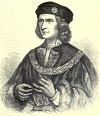 "At the time of the death of Edward IV, Richard of Gloucester was in the North, attending to his duties as commander against the army in the Scottish marches. He immediately commenced his proceedings with that consummate and hypocritical art of which he was a first-rate master. He at once put his retinue into deep mourning and marched to York attended by 600 knights and squires. There he ordered the obsequies of the departed king to be performed with all solemnity in the cathedral. He then summoned the nobility and gentry of the country to take the oath of allegiance to his nephew, Edward V, and he led the way by first taking it himself." (Cassell's history of England, Vol. II. King's ed. p. 47.)
 In Elizabethan England, during the times when plays were not completely outlawed, going to the theatre was the favourite activity of the masses. When disease ravaged London, actors would travel across the English countryside, entertaining farmers. There were also many days devoted to feasting, such as Mad Day, Midsummer Day, and Ascension Day (just to name a few), when people would drink and make merry. Dances were popular, whether you lived in London or in a small town, and so was getting together at the local pub for sing-alongs.