| | Enter CLARENCE and BRAKENBURY. | |
| BRAKENBURY | Why looks your grace so heavily to-day? | |
| CLARENCE | O, I have pass'd a miserable night, | |
| | So full of ugly sights, of ghastly dreams, | |
| | That, as I am a Christian faithful man, |
| | I would not spend another such a night, |
| | Though 'twere to buy a world of happy days, | |
| | So full of dismal terror was the time! | |
| BRAKENBURY | What was your dream? I long to hear you tell it. | |
| CLARENCE | Methought that I had broken from the Tower, |
| | And was embark'd to cross to Burgundy; | | 10 |
| | And, in my company, my brother Gloucester; | |
| | Who from my cabin tempted me to walk | |
| | Upon the hatches: thence we look'd toward England, | |
| | And cited up a thousand fearful times, |
| | During the wars of York and Lancaster | |
| | That had befall'n us. As we paced along | |
| | Upon the giddy footing of the hatches, | |
| | Methought that Gloucester stumbled; and, in falling, | |
| | Struck me, that thought to stay him, overboard, |
| | Into the tumbling billows of the main. | | 20 |
| | Lord, Lord! methought, what pain it was to drown! | |
| | What dreadful noise of waters in mine ears! | |
| | What ugly sights of death within mine eyes! | |
| | Methought I saw a thousand fearful wrecks; |
| | Ten thousand men that fishes gnaw'd upon; |
| | Wedges of gold, great anchors, heaps of pearl, | |
| | Inestimable stones, unvalued jewels, | |
| | All scatter'd in the bottom of the sea: | |
| | Some lay in dead men's skulls; and, in those holes |
| | Where eyes did once inhabit, there were crept, | | 30 |
| | As 'twere in scorn of eyes, reflecting gems, | |
| | Which woo'd the slimy bottom of the deep, | |
| | And mock'd the dead bones that lay scatter'd by. | |
| BRAKENBURY | Had you such leisure in the time of death |
| | To gaze upon the secrets of the deep? | |
| CLARENCE | Methought I had; and often did I strive | |
| | To yield the ghost: but still the envious flood | |
| | Kept in my soul, and would not let it forth | |
| | To seek the empty, vast and wandering air; |
| | But smother'd it within my panting bulk, | | 40 |
| | Which almost burst to belch it in the sea. | |
| BRAKENBURY | Awaked you not with this sore agony? | |
| CLARENCE | O, no, my dream was lengthen'd after life; | |
| | O, then began the tempest to my soul, |
| | Who pass'd, methought, the melancholy flood, |
| | With that grim ferryman which poets write of, | |
| | Unto the kingdom of perpetual night. | |
| | The first that there did greet my stranger soul, | |
| | Was my great father-in-law, renowned Warwick; |
| | Who cried aloud, 'What scourge for perjury | | 50 |
| | Can this dark monarchy afford false Clarence?' | |
| | And so he vanish'd: then came wandering by | |
| |
A shadow like an angel, with bright hair | |
| | Dabbled in blood; and he squeak'd out aloud, |
| | 'Clarence is come; false, fleeting, perjured Clarence, |
| | That stabb'd me in the field by Tewksbury; | |
| | Seize on him, Furies, take him to your torments!' | |
| | With that, methoughts, a legion of foul fiends | |
| | Environ'd me about, and howled in mine ears |
| | Such hideous cries, that with the very noise | | 60 |
| | I trembling waked, and for a season after | |
| | Could not believe but that I was in hell, | |
| | Such terrible impression made the dream. | |
| BRAKENBURY | No marvel, my lord, though it affrighted you; |
| | I promise, I am afraid to hear you tell it. |
| CLARENCE | O Brakenbury, I have done those things, | |
| | Which now bear evidence against my soul, | |
| | For Edward's sake; and see how he requites me! | |
| | O God! if my deep prayers cannot appease thee, |
| | But thou wilt be avenged on my misdeeds, | | 70 |
| | Yet execute thy wrath in me alone, | |
| | O, spare my guiltless wife and my poor children! | |
| | I pray thee, gentle keeper, stay by me; | |
| | My soul is heavy, and I fain would sleep. |
| BRAKENBURY | I will, my lord: God give your grace good rest! |
| | CLARENCE sleeps. | |
| | Sorrow breaks seasons and reposing hours, | |
| | Makes the night morning, and the noontide night. | |
| | Princes have but their titles for their glories, | |
| | An outward honour for an inward toil; |
| | And, for unfelt imagination, | | 80 |
| | They often feel a world of restless cares: | |
| | So that, betwixt their tides and low names, | |
| | There's nothing differs but the outward fame. | |
| | Enter the two Murderers. | |
| First Murderer | Ho! who's here? |
| BRAKENBURY | What wouldst thou, fellow? and how cam'st you hither? |
| First Murderer | I would speak with Clarence, and I came hither on my legs. | |
| BRAKENBURY | What, so brief? | |
| Second Murderer | 'Tis better, sir, than to be tedious. Show | |
| | him our commission; talk no more. | | 90 |
| | [ A paper is delivered to BRAKENBURY who reads it. | |
| BRAKENBURY | I am, in this, commanded to deliver |
| | The noble Duke of Clarence to your hands: | |
| | I will not reason what is meant hereby, | |
| | Because I will be guiltless of the meaning. |
| | There lies the duke alseep -- and there the keys, |
| | I'll to the king; and signify to him | |
| | That thus I have resign'd to you my charge. | |
| First Murderer | You may sir, 'tis a point of wisdom: fare you well. | | 100 |
| | [ Exit BRAKENBURY. | |
| Second Murderer | What, shall we stab him as he sleeps? | |
| First Murderer | No; then he will say 'twas done cowardly, when he wakes. |
| Second Murderer | Why, he shall never wake till | |
| | the judgment-day. | |
| First Murderer | Why, then he will say we stabb'd him sleeping. | |
| Second Murderer | The urging of that word 'judgment' hath bred a kind | |
| | of remorse in me. |
| First Murderer | What, art thou afraid? | |
| Second Murderer | Not to kill him, having a warrant for it; but to be | |
| | damned for killing him, from which no warrant can defend me. | |
| First Murderer | I thought thou hadst been resolute. | |
| Second Murderer | So I am, to let him live. |
| First Murderer | I'll back to the Duke of Gloucester, and tell him so. | |
| Second Murderer | Nay, I pray thee, stay a little: I hope my holy humour | | 120 |
| | will change; 'twas wont to hold me but while one | |
| | would tell twenty. | |
| First Murderer | How dost thou feel thyself now? |
| Second Murderer | 'Faith, some certain dregs of conscience are yet | |
| | within me. | |
| First Murderer | Remember our reward, when the deed is done. | |
| Second Murderer | 'Zounds, he dies: I had forgot the reward. | |
| First Murderer | Where is thy conscience now? | | 130 |
| Second Murderer | In the Duke of Gloucester's purse. | |
| First Murderer | So when he opens his purse to give us our reward, | |
| | thy conscience flies out. | |
| Second Murderer | Let it go; there's few or none will entertain it. | |
| First Murderer | What if it come to thee again? |
| Second Murderer | I'll not meddle with it: it | |
| | makes a man a coward: a man cannot steal, but it | |
| | accuseth him; a man cannot swear, but it cheques him; | | 140 |
| | a man cannot lie with his neighbour's wife, but it | |
| | detects him: 'tis a blushing shamefast spirit that |
| | mutinies in a man's bosom; it fills one full of | |
| | obstacles: it made me once restore a purse of gold | |
| | that by chance I found; it beggars any man that keeps it: it | |
| | is turned out of all towns and cities for a | |
| | dangerous thing; and every man that means to live |
| | well endeavours to trust to himself and to live | |
| | without it. | |
| First Murderer | 'Zounds, it is even now at my elbow, persuading me | |
| | not to kill the duke. | |
| Second Murderer | Take the devil in thy mind, and believe him not: he | | 150 |
| | would insinuate with thee but to make thee sigh. | |
| First Murderer | Tut, I am strong-fram'd, he cannot prevail with me. | |
| Second Murderer | Spoke like a tail fellow that respects his | |
| | reputation. Come, shall we to this gear? |
| First Murderer | Take him over the costard with the hilts of thy | |
| | sword, and then throw him into the malmsey-butt | |
| | in the next room. | | 160 |
| Second Murderer | O excellent device! make a sop of him. | |
| First Murderer | Soft! he wakes. |
| Second Murderer | Strike! |
| First Murderer | No, we'll reason with him. | |
| CLARENCE | Where art thou, keeper? give me a cup of wine. | |
| Second murderer | You shall have wine enough, my lord, anon. | |
| CLARENCE | In God's name, what art thou? | | 170 |
| Second Murderer | A man, as you are. |
| CLARENCE | But not, as I am, royal. | |
| Second Murderer | Nor you, as we are, loyal. | |
| CLARENCE | Thy voice is thunder, but thy looks are humble. | |
| Second Murderer | My voice is now the king's, my looks mine own. | |
| CLARENCE | How darkly and how deadly dost thou speak! |
| | Your eyes do menace me: why look you pale? | |
| | Who sent you hither? Wherefore do you come? | |
| Both | To, to, to-- | | 180 |
| CLARENCE | To murder me? | |
| Both | Ay, ay. |
| CLARENCE | You scarcely have the hearts to tell me so, | |
| | And therefore cannot have the hearts to do it. | |
| | Wherein, my friends, have I offended you? | |
| First Murderer | Offended us you have not, but the king. | |
| CLARENCE | I shall be reconcil'd to him again. |
| Second Murderer | Never, my lord; therefore prepare to die. | | 190 |
| CLARENCE | Are you call'd forth from out a world of men | |
| | To slay the innocent? What is my offence? | |
| | Where are the evidence that do accuse me? | |
| | What lawful quest have given their verdict up |
| | Unto the frowning judge? or who pronounced | |
| | The bitter sentence of poor Clarence' death? | |
| | Before I be convict by course of law, | |
| | To threaten me with death is most unlawful. | |
| | I charge you, as you hope to have redemption |
| | By Christ's dear blood shed for our grievous sins, | | 200 |
| | That you depart and lay no hands on me | |
| | The deed you undertake is damnable. | |
| First Murderer | What we will do, we do upon command. | |
| Second Murderer | And he that hath commanded is the king. |
| CLARENCE | Erroneous vassal! the great King of kings | |
| | Hath in the tables of his law commanded | |
| | That thou shalt do no murder: and wilt thou, then, | |
| | Spurn at his edict and fulfill a man's? | | 210 |
| | Take heed; for he holds vengeance in his hands, |
| | To hurl upon their heads that break his law. | |
| Second Murderer | And that same vengeance doth he hurl on thee, | |
| | For false forswearing and for murder too: | |
| | Thou didst receive the holy sacrament, | |
| | To fight in quarrel of the house of Lancaster. |
| First Murderer | And, like a traitor to the name of God, | |
| | Didst break that vow; and with thy treacherous blade | |
| | Unrip'dst the bowels of thy sovereign's son. | | 220 |
| Second Murderer | Whom thou wert sworn to cherish and defend. | |
| First Murderer | How canst thou urge God's dreadful law to us, |
| | When thou hast broke it in so dear degree? | |
| CLARENCE | Alas! for whose sake did I that ill deed? | |
| | For Edward, for my brother, for his sake: Why, sirs, | |
| | He sends ye not to murder me for this | |
| | For in this sin he is as deep as I. |
| | If God will be revenged for this deed. | |
| | O, know you yet, he doth it publicly, | |
| | Take not the quarrel from his powerful arm; | | 230 |
| | He needs no indirect nor lawless course | |
| | To cut off those that have offended him. |
| First Murderer | Who made thee, then, a bloody minister, | |
| | When gallant-springing brave Plantagenet, | |
| | That princely novice, was struck dead by thee? | |
| CLARENCE | My brother's love, the devil, and my rage. | |
| First Murderer | Thy brother's love, our duty, and thy fault, |
| | Provoke us hither now to slaughter thee. | |
| CLARENCE | Oh, if you love my brother, hate not me; | |
| | I am his brother, and I love him well. | | 240 |
| | If you be hir'd for meed, go back again, | |
| | And I will send you to my brother Gloucester, |
| | Who shall reward you better for my life | |
| | Than Edward will for tidings of my death. | |
| Second Murderer | You are deceived, your brother Gloucester hates you. | |
| CLARENCE | O, no, he loves me, and he holds me dear: | |
| | Go you to him from me. |
| Both | Ay, so we will. | |
| CLARENCE | Tell him, when that our princely father York | |
| | Bless'd his three sons with his victorious arm, | |
| | And charged us from his soul to love each other, | | 250 |
| | He little thought of this divided friendship: |
| | Bid Gloucester think of this, and he will weep. | |
| First Murderer | Ay, millstones; as be lesson'd us to weep. | |
| CLARENCE | O, do not slander him, for he is kind. | |
| First Murderer | Right, | |
| | As snow in harvest. Thou deceivest thyself: |
| | 'Tis he that sends us to destroy you here. | |
| CLARENCE | It cannot be; for when I parted with him, | |
| | He hugg'd me in his arms, and swore, with sobs, | |
| | That he would labour my delivery. | |
| Second Murderer | Why, so he doth, now he delivers you | | 260 |
| | From this world's thraldom to the joys of heaven. | |
| First Murderer | Make peace with God, for you must die, my lord. | |
| CLARENCE | Hast thou that holy feeling in thy soul, | |
| | To counsel me to make my peace with God, | |
| | And art thou yet to thy own soul so blind, |
| | That thou wilt war with God by murdering me? | |
| | Ah, sirs, consider, he that set you on | |
| | To do this deed will hate you for the deed. | |
| Second Murderer | What shall we do? | |
| CLARENCE | Relent, and save your souls. |
| First Murderer | Relent! 'tis cowardly and womanish. | | 270 |
| CLARENCE | Not to relent is beastly, savage, devilish. | |
| | Which of you, if you were a prince's son, | |
| | Being pent from liberty, as I am now, | |
| | if two such murderers as yourselves came to you, |
| | Would not entreat for life? | |
| | My friend, I spy some pity in thy looks: | |
| | O, if thine eye be not a flatterer, | |
| | Come thou on my side, and entreat for me, | |
| | As you would beg, were you in my distress |
| | A begging prince what beggar pities not? | | 280 |
| Second Murderer | Look behind you, my lord. | |
| First Murderer | Take that, and that: if all this will not do, | |
| | [ Stabs him. | |
| | I'll drown you in the malmsey-butt within. | |
| | [ Exit, with the body. | |
| Second Murderer | A bloody deed, and desperately dispatch'd! |
| | How fain, like Pilate, would I wash my hands | |
| | Of this most grievous guilty murder done! | |
| | Re-enter First Murderer. | |
| First Murderer | How now! what mean'st thou, that thou help'st me not? | |
| | By heavens, the duke shall know how slack thou art! | |
| Second Murderer | I would he knew that I had sav'd his brother! |
| | Take thou the fee, and tell him what I say; | | 290 |
| | For I repent me that the duke is slain. | |
| | [ Exit | |
| First Murderer | So do not I: go, coward as thou art. | |
| | Now must I hide his body in some hole, | |
| | Until the duke take order for his burial: |
| | And when I have my meed, I must away; | |
| | For this will out, and here I must not stay. | |
| | [ Exit | |
 Richard III: Plot Summary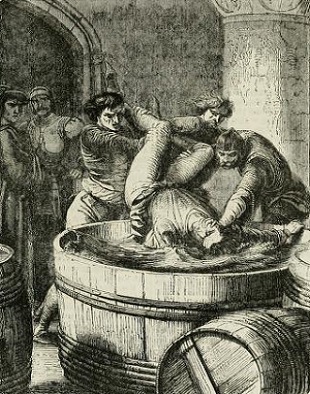
 "Macbeth, Richard III, were both villains, murderers. Both reached the thrones they occupied by wading through blood.
In this respect they are like Iago. Yet, in their cases, Shakespeare uses but few soliloquies, and these very brief, while Iago constantly, and, in
extenso, soliloquizes. Why this difference? Because between Macbeth and Richard III on the one hand, and Iago on the other, there is a radical
difference. They accomplished their ends by means that were mostly open, undisguised, straightforward. Iago works not openly, but, like the mole, almost wholly underground, secretly. He trusts to
deception to accomplish his purpose." (William Fleming, Shakespeare's Plots. p. 414.)
"Macbeth, Richard III, were both villains, murderers. Both reached the thrones they occupied by wading through blood.
In this respect they are like Iago. Yet, in their cases, Shakespeare uses but few soliloquies, and these very brief, while Iago constantly, and, in
extenso, soliloquizes. Why this difference? Because between Macbeth and Richard III on the one hand, and Iago on the other, there is a radical
difference. They accomplished their ends by means that were mostly open, undisguised, straightforward. Iago works not openly, but, like the mole, almost wholly underground, secretly. He trusts to
deception to accomplish his purpose." (William Fleming, Shakespeare's Plots. p. 414.)
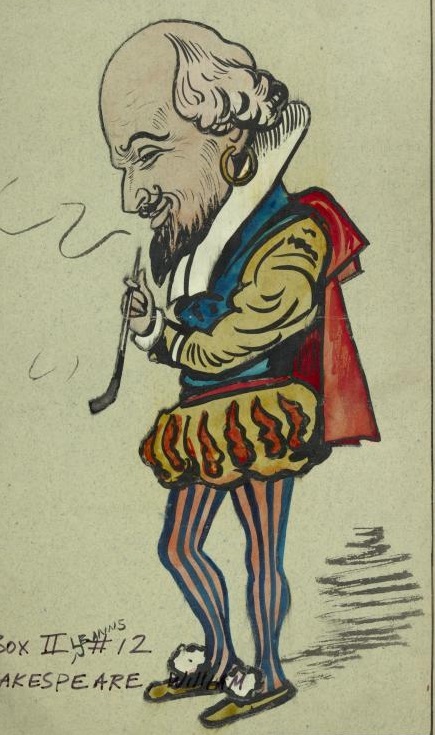 A rich and sweet wine brought to England from Greece in the 16th century, Malmsey is now produced on the island of Madeira. Shakespeare writes about Malmsey in Love's Labour's Lost (5.2.240) and 2 Henry IV (2.1.36), but the most famous reference to Malmsey in all of literature can be found in Richard III, when Richard orders the execution of his brother, the Duke of Clarence. Richard's hired assassins decide to drown Clarence in a large cask (butt) of the brew.