| directory |
| home | contact |
|
|||||||||||||||
| search | |||||||||||||||
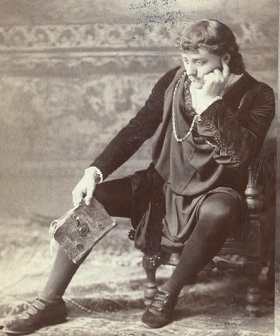
Hamlet's Soliloquy: To be, or not to be: that is the question (3.1)CommentaryUnlike Hamlet's first two major soliloquies, his third and most famous speech seems to be governed by reason and not frenzied emotion. Unable to do little but wait for completion of his plan to "catch the conscience of the king", Hamlet sparks an internal philosophical debate on the advantages and disadvantages of existence, and whether it is one's right to end his or her own life. Some scholars limit Hamlet's discussion to a deliberation of whether he should take his own life. "Yet nothing anywhere in the speech relates it to Hamlet's individual case. He uses the pronouns we and us, the indefinite who, the impersonal infinitive. He speaks explicitly of us all, of what flesh is heir to, of what we suffer at the hands of time or fortune - which serves incidentally to indicate what for Hamlet is meant by to be" (Jenkins 489). Hamlet asks the question for all dejected souls -- is it nobler to live miserably or to end one's sorrows with a single stroke? He knows that the answer would be undoubtedly yes if death were like a dreamless sleep. The rub or obstacle Hamlet faces is the fear of what dreams may come (74), i.e. the dread of something after death (86). Hamlet is well aware that suicide is condemned by the church as a mortal sin. Hamlet's soliloquy is interrupted by Ophelia who is saying her prayers. Hamlet addresses her as Nymph, a courtly salutation common in the Renaissance1. Some critics argue that Hamlet's greeting is strained and coolly polite, and his request that she remembers him in her prayers is sarcastic. However, others claim that Hamlet, emerging from his moment of intense personal reflection, genuinely implores the gentle and innocent Ophelia to pray for him. It is fascinating to compare Shakespeare's finished masterpiece to the version found in the First Quarto (or Q1) published by Nicholas Ling and John Trundell in 1603: To be, or not to be, I there's the point.Q1 was likely a product of the memories of actors who had staged Hamlet and, in 1604, a new version appeared (Q2), based on Shakespeare's own manuscript, complete with the soliloquy as we know it. For an absolutely remarkable interpretation of Hamlet's soliloquy, please watch the BBC production starring Sir Derek Jacobi, available in its entirety from the BBC on YouTube. You can find it at 1:25:30. Back to Soliloquy Annotations Notes 1. See also A Midsummer Night's Dream 2.1.245, 4.1.132; Two Gentlemen of Verona 5.4.12. How to cite this article: ___________ Even More...  Hamlet's Silence An Excuse for Doing Nothing: Hamlet's Delay Foul Deeds Will Rise: Hamlet and Divine Justice Defending Claudius - The Charges Against the King Shakespeare's Fools: The Grave-Diggers in Hamlet Hamlet's Humor: The Wit of Shakespeare's Prince of Denmark All About Yorick Hamlet's Melancholy: The Transformation of the Prince Hamlet's Antic Disposition: Is Hamlet's Madness Real? The Significance of the Ghost in Armor The Significance of Ophelia's Flowers Ophelia and Laertes Mistrusted Love: Ophelia and Polonius Divine Providence in Hamlet What is Tragic Irony? Seneca's Tragedies and the Elizabethan Drama Shakespeare's Sources for Hamlet Characteristics of Elizabethan Tragedy
Why Shakespeare is so Important Shakespeare's Language Shakespeare's Influence on Other Writers Daily Life in Shakespeare's London Life in Stratford (structures and guilds) Life in Stratford (trades, laws, furniture, hygiene) Stratford School Days: What Did Shakespeare Read? Games in Shakespeare's England [A-L] Games in Shakespeare's England [M-Z] An Elizabethan Christmas Clothing in Elizabethan England Queen Elizabeth: Shakespeare's Patron King James I of England: Shakespeare's Patron The Earl of Southampton: Shakespeare's Patron Going to a Play in Elizabethan London Ben Jonson and the Decline of the Drama Publishing in Elizabethan England Shakespeare's Audience Religion in Shakespeare's England Alchemy and Astrology in Shakespeare's Day Entertainment in Elizabethan England London's First Public Playhouse Shakespeare Hits the Big Time Hamlet's Silence An Excuse for Doing Nothing: Hamlet's Delay Foul Deeds Will Rise: Hamlet and Divine Justice Defending Claudius - The Charges Against the King Shakespeare's Fools: The Grave-Diggers in Hamlet Hamlet's Humor: The Wit of Shakespeare's Prince of Denmark All About Yorick Hamlet's Melancholy: The Transformation of the Prince Hamlet's Antic Disposition: Is Hamlet's Madness Real? The Significance of the Ghost in Armor The Significance of Ophelia's Flowers Ophelia and Laertes Mistrusted Love: Ophelia and Polonius Divine Providence in Hamlet What is Tragic Irony? Seneca's Tragedies and the Elizabethan Drama Shakespeare's Sources for Hamlet Characteristics of Elizabethan Tragedy
Why Shakespeare is so Important Shakespeare's Language Shakespeare's Influence on Other Writers Daily Life in Shakespeare's London Life in Stratford (structures and guilds) Life in Stratford (trades, laws, furniture, hygiene) Stratford School Days: What Did Shakespeare Read? Games in Shakespeare's England [A-L] Games in Shakespeare's England [M-Z] An Elizabethan Christmas Clothing in Elizabethan England Queen Elizabeth: Shakespeare's Patron King James I of England: Shakespeare's Patron The Earl of Southampton: Shakespeare's Patron Going to a Play in Elizabethan London Ben Jonson and the Decline of the Drama Publishing in Elizabethan England Shakespeare's Audience Religion in Shakespeare's England Alchemy and Astrology in Shakespeare's Day Entertainment in Elizabethan England London's First Public Playhouse Shakespeare Hits the Big Time
|
Hamlet: The Complete Play with Explanatory Notes Extensive Analysis of Act 2, Scene 2 The Hamlet and Ophelia Subplot The Norway Subplot in Hamlet Hamlet Basics Hamlet: Plot Summary with Key Passages Analysis of the Characters in Hamlet Deception in Hamlet Problem Plays and Revenge Tragedy
The Purpose of The Murder of Gonzago The Dumb-Show: Why Hamlet Reveals his Knowledge to Claudius Hamlet's Relationship with the Ghost Philological Examination Questions on Hamlet Quotations from Hamlet (with commentary) Hamlet Study Quiz (with detailed answers) Analysis of I am sick at heart (1.1) Analysis of What a piece of work is a man! (2.2) Hamlet: Q & A Soliloquy Analysis: O this too too... (1.2) Soliloquy Analysis: O, what a rogue and peasant slave am I!... (2.2) Soliloquy
Analysis: To be, or not to be... (3.1) Soliloquy Analysis: Tis now the very witching time of night... (3.2) Soliloquy Analysis: Now might I do it pat... (3.3) Soliloquy Analysis: How all occasions do inform against me... (4.4) Ophelia's Burial and Christian Rituals The Baker's Daughter: Ophelia's Nursery Rhymes Hamlet as National Hero The Elder Hamlet: The Kingship of Hamlet's Father Claudius and the Condition of Denmark In Secret Conference: The Meeting Between Claudius and Laertes O Jephthah - Toying with Polonius The Death of Polonius and its Impact on Hamlet's Character Blank Verse and Diction in Shakespeare's Hamlet |
 In his book Shakespearean Tragedy, A. C. Bradey notes that "The present position of the 'To be or not to be' soliloquy, and of the interview with Ophelia, appears to have been due to an after-thought of Shakespeare's; for in the First Quarto they precede, instead of following, the arrival of the players, and consequently the arrangement for the play-scene. This is a notable instance of the truth that 'inspiration' is by no means confined to a poet's first conceptions." Does the position of Hamlet's soliloquy make a difference?
 ©1999-2021 Shakespeare Online. All Rights Reserved.